

ENGAGEMENT . PROCESS . PHASES
How an engagement runs.
A clear, four-phase engagement built around observation, mapping, structure, and adoption. Sized to scope, paced to your team.
PHASE 01
WEEK 1-2
• REVIEW
Review current workflow.
We observe how requests, tasks, materials and updates currently move through your team. Conversations with stakeholders. Sampling of recent operating threads.

PHASE 02
WEEK 2-4
• MAP
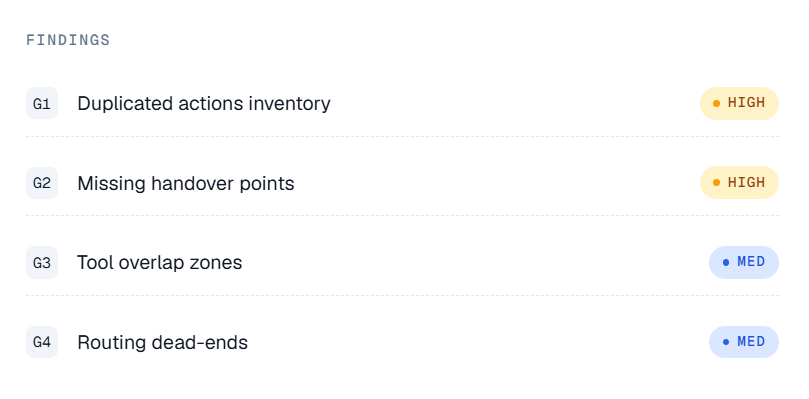
Identify gaps.
Duplicated steps, missing handovers, ambiguous ownership and inefficient actions surface against the current-state map. Each item is rated by severity and effort.
PHASE 03
WEEK 4-8
• BUILD
Build operating structure.
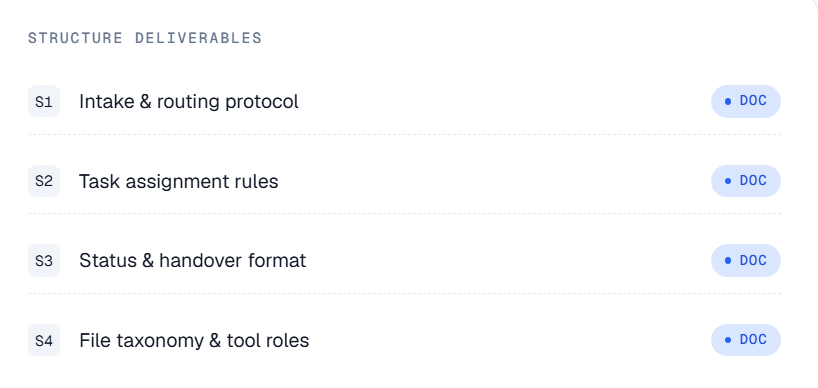
A documented, repeatable operating logic that fits how the team genuinely works. Routing, ownership, handover, status and materials — defined together.
PHASE 04
WEEK 8-12+
• SUPPORT
Support implementation.
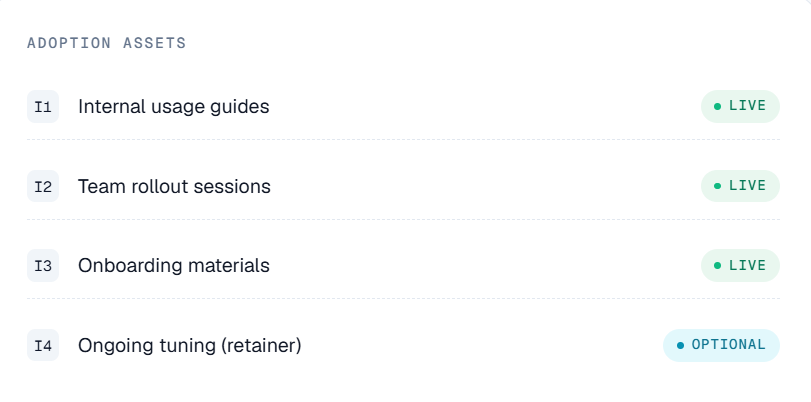
Materials prepared for the team. Guidelines documented. Office-hours through the first operating cycles. Optional retainer for tuning as the system runs.

CALENDAR VIEW
Typical 12-week engagement.
Phases overlap deliberately, so structure begins forming before review concludes.

DELIVERABLES
What lands on your team's drive.
The full operating system, kept in formats your team already uses.
D-01
Workflow map
Annotated diagram of your operating flow, from intake to archive.
D-02
Intake & routing protocol
Channels, forms, request types, and routing rules per category.
D-03
Assignment matrix
Ownership, backup, escalation and handoff rules per task type.
D-04
Status & cadence guide
Update formats and rhythm per stakeholder group.
D-05
File taxonomy
Folder structure, naming conventions and access patterns.
D-06
Internal usage guide
Team-facing documentation referencing the full system.

START
Start with a workflow review.
Most engagements begin with a short scoping call. Tell us about your team and we'll come back with a proposed scope.

